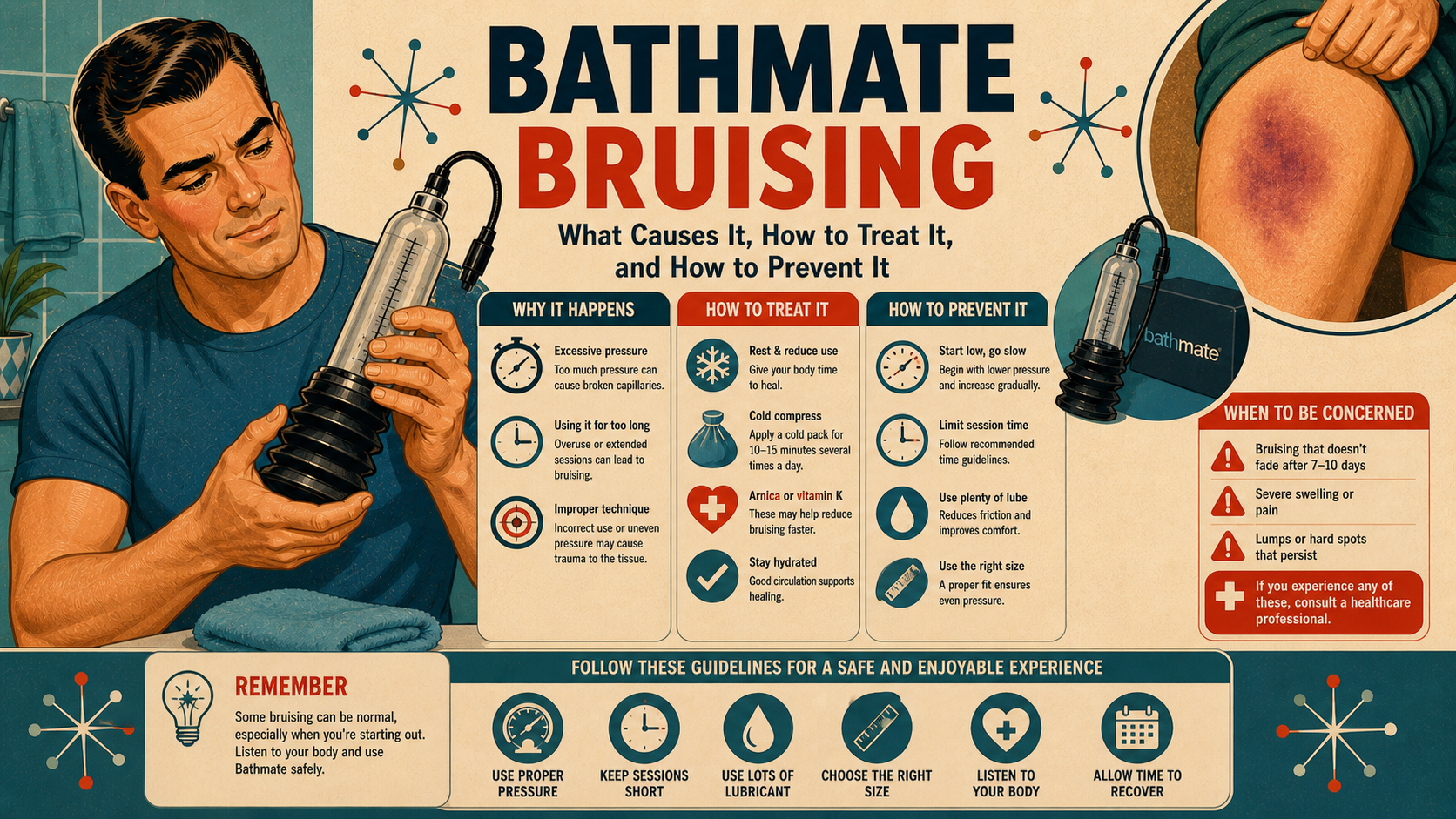
Bathmate Bruising How Long to Heal: Recovery Guide and Prevention Tips
If you have noticed bruising after using your Bathmate, you are not alone — and it is understandable to feel concerned. Bruising is one of the most commonly reported side effects among new pump users, especially when starting out or adjusting technique.
The good news: most pump-related bruising is mild, temporary, and resolves on its own within days. With proper care and technique adjustments, you can support faster healing and reduce the likelihood of recurrence.
This guide explains why bruising can happen after penis pump use, what typical healing timelines look like, and practical steps to promote recovery and prevent future issues. No alarmism, no guesswork — just clear, evidence-informed guidance to help you use your pump safely and confidently.
Why Bruising Can Occur After Pump Use
Understanding the cause helps put bruising in perspective and guides prevention.
The Physiology of Pump-Related Bruising
Penis pumps create negative pressure that draws blood into the erectile tissues. This engorgement supports firmness, but it also increases pressure on small blood vessels (capillaries) near the skin’s surface.
When pressure is too high, applied too quickly, or sustained too long:
- Capillaries can rupture, causing blood to leak into surrounding tissue
- This appears as bruising: red, purple, or blue discoloration under the skin
- The body gradually reabsorbs the leaked blood, and the bruise fades over time
This is similar to bruising from other forms of pressure or minor trauma — it reflects localized vascular stress, not necessarily tissue damage.
Common Triggers for Bruising
| Factor | How It Contributes to Bruising |
|---|---|
| Excessive pressure | Higher suction increases capillary stress beyond their tolerance |
| Rapid pressure changes | Pumping too aggressively creates pressure spikes that vessels cannot adapt to |
| Long session duration | Prolonged exposure increases cumulative stress on blood vessels |
| Poor seal or uneven pressure | Creates localized “hot spots” where pressure concentrates |
| First-time or infrequent use | Tissues are still adapting to vacuum pressure sensations |
| Blood-thinning medications or supplements | Reduce clotting efficiency, making bruising more likely and slower to heal |
What Normal Bruising Looks Like and How Long It Takes to Heal
Most pump-related bruising follows a predictable pattern.
Typical Appearance and Progression
- Day 1-2: Red or purple discoloration; may feel slightly tender
- Day 3-5: Color shifts to blue, green, or yellow as the body breaks down hemoglobin
- Day 5-10: Fading continues; tenderness resolves; skin returns to normal
Typical Healing Timeline
| Bruise Severity | Expected Healing Time |
|---|---|
| Mild (small, faint discoloration) | 3-5 days |
| Moderate (visible purple/blue area) | 5-10 days |
| More pronounced (larger area, some tenderness) | 10-14 days |
Important: These are general guidelines. Individual healing varies based on age, circulation health, medications, and overall wellness.
How to Support Faster Healing
While most bruising resolves on its own, these practices can promote comfort and recovery.
Immediate Aftercare (First 24 Hours)
- Rest: Avoid further pump use or sexual activity that puts pressure on the area
- Cold compress: Apply a cool (not ice-cold) cloth for 10-15 minutes to reduce swelling; repeat every few hours if needed
- Gentle elevation: When lying down, a small pillow under the hips can support circulation
- Avoid heat: Skip hot baths, saunas, or heating pads in the first 24 hours, as heat can increase blood flow to the area and worsen bruising
Days 2-7: Promote Recovery
- Warm compress: After the first 24 hours, gentle warmth can support blood flow and healing
- Light movement: Short walks support overall circulation without stressing the area
- Hydration and nutrition: Adequate water, vitamin C, and protein support tissue repair
- Avoid aggravating activities: Skip intense exercise, heavy lifting, or sexual activity that causes friction until tenderness resolves
What to Avoid During Healing
- Do not resume pump use until bruising and tenderness have fully resolved
- Avoid massaging or rubbing the bruised area aggressively
- Skip alcohol and nicotine, which can impair circulation and delay healing
- Do not apply topical creams or ointments unless recommended by a healthcare provider
When Bruising May Signal a Problem
While most bruising is benign, certain signs warrant medical attention.
Red Flags That Warrant Evaluation
- Bruising that worsens after 48 hours instead of gradually fading
- Severe pain, swelling, or warmth in the bruised area
- Discoloration that spreads beyond the initial site
- Bruising accompanied by numbness, tingling, or loss of sensation
- Difficulty urinating or unusual sensations in the testicles or perineum
- Bruising that recurs frequently despite technique adjustments
If you experience any of these, stop using the pump and consult a healthcare provider.
How to Prevent Bruising in Future Sessions
Prevention is simpler than recovery. These habits reduce bruising risk significantly.
Before Your Session
- Measure accurately: Ensure your pump size matches your erect length and girth
- Trim pubic hair: Reduces friction and helps the comfort pad seal evenly
- Use comfortably warm water: Supports circulation and tissue flexibility
- Review technique: Press evenly against the pubic bone; avoid angling the cylinder
During Your Session
- Start low, go slow: Begin with minimal pressure; increase only if comfortable
- Limit duration: Keep sessions to 10-15 minutes maximum, especially when starting out
- Monitor sensation: Pause every 2-3 minutes to check for discomfort or unusual pressure
- Breathe deeply: Relaxed breathing supports parasympathetic activation and healthy circulation
After Your Session
- Release pressure gradually: Use the valve to reduce suction slowly before removing the pump
- Rinse and dry thoroughly: Prevents residue buildup that can affect future seal quality
- Note any unusual sensations: Track patterns to adjust technique proactively
Progressive Adaptation
- Week 1: 3-5 minute sessions at lowest comfortable pressure
- Week 2: 5-7 minutes; slight pressure increase only if no discomfort
- Week 3+: Gradually extend to 10-15 minutes as tolerance builds
- Always: Prioritize comfort over intensity; progress is not linear
Frequently Asked Questions
Is bruising after Bathmate use common?
Yes, mild bruising is reported by some users, especially during early sessions or with higher pressure. It typically resolves within 3-10 days.
Should I stop using my Bathmate if I bruise?
Yes, pause use until the bruise has fully healed and tenderness has resolved. Resume with lower pressure and shorter sessions to prevent recurrence.
Can bruising cause permanent damage?
Mild, occasional bruising from proper pump use is unlikely to cause lasting harm. However, repeated over-pumping, excessive pressure, or ignoring warning signs can increase risk of tissue stress or vascular irritation.
How do I know if my bruise is healing normally?
Normal healing involves gradual color changes (red/purple → blue/green → yellow) and decreasing tenderness over 3-14 days. If the bruise worsens, spreads, or is accompanied by severe pain, consult a healthcare provider.
Does taking blood thinners affect bruising risk?
Yes. Medications like warfarin, aspirin therapy, or certain supplements (fish oil, vitamin E, ginkgo) can increase bruising likelihood and slow healing. Consult your provider before using a pump if you take these substances.
Can I speed up bruise healing with creams or supplements?
Most over-the-counter bruise creams have limited evidence for effectiveness. Focus on rest, hydration, and gentle care. If you want to explore supplements like arnica or bromelain, discuss with a healthcare provider first.
Next Steps
Bruising after pump use is usually a sign to adjust technique — not a reason to abandon your routine. By understanding healing timelines, supporting recovery with simple care practices, and prioritizing prevention through proper sizing and pressure control, you can use your Bathmate safely and confidently.
If you are exploring Bathmate models designed with enhanced comfort features, precise pressure control, and beginner-friendly guidance to support safe, consistent use, check out the Bathmate HydroMax series — engineered for reliable performance, intuitive valve systems, and long-term satisfaction.
Check verified Bathmate pricing and model comparisons here
Disclaimer: This content is for educational purposes only and does not constitute medical advice, diagnosis, or treatment. Vacuum erection devices may not be suitable for everyone. Consult a qualified healthcare provider before use, especially if you have cardiovascular conditions, take blood-thinning medication, or experience pain during erection. Discontinue use and seek medical attention if you experience persistent pain, discoloration, numbness, or swelling.


