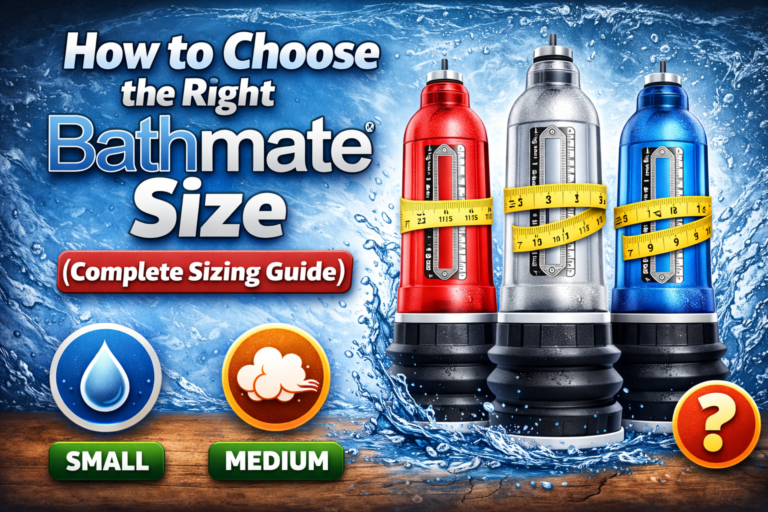
Bathmate vs Extender: Vacuum Pressure vs Traction Devices
I’ve used both systems long enough to see where people get confused.
They compare Bathmate and extenders as if they do the same thing. They don’t. The mechanism is different. The time commitment is different. The physical stress pattern is different.
If you don’t understand that difference, you choose based on price instead of physiology.
Let’s fix that.
Mechanism 1: Hydro Vacuum Pressure (Bathmate)
Bathmate uses hydrostatic vacuum pressure.
The process:
- Fill the cylinder with water.
- Create a sealed environment.
- Apply controlled negative pressure.
- Temporary expansion occurs due to increased blood flow.
The force applied is outward expansion.
Sessions are short:
- 10–20 minutes typical
- 3–5 times per week structured
The stress is intermittent.
You apply pressure.
You release.
You recover.
Hydro systems focus on short controlled expansion cycles.
Mechanism 2: Traction-Based Extenders
Extenders use mechanical traction.
The process:
- Attach device to the shaft.
- Apply consistent pulling force.
- Maintain tension for extended periods.
The force applied is linear stretch.
Sessions are long:
- 2–8 hours per day common in traction protocols
- Lower intensity, longer duration
The stress is continuous.
Instead of expansion cycles, traction relies on prolonged tension over time.
This difference alone changes who each device fits best.
Time Commitment Comparison
Bathmate:
- Short sessions
- Shower-friendly
- Easier to integrate into routine
Extender:
- Requires multiple hours
- Worn under clothing
- Demands schedule discipline
If someone cannot realistically commit to several hours daily, traction becomes inconsistent.
If someone prefers short structured sessions, hydro pressure feels manageable.
Frequency structure matters more than enthusiasm.
Stress Pattern Differences
Hydro vacuum:
- Rapid but controlled expansion
- Emphasis on pressure moderation
- Recovery days essential
Traction:
- Gradual stretch over long periods
- Lower intensity per minute
- Requires high cumulative hours
One is cyclical.
One is sustained.
Your tolerance for mechanical stress should influence your choice.
Comfort and Practical Use
Hydro systems:
- Used in private
- Short duration
- Immediate feedback from pressure control
Extenders:
- Worn for long periods
- Require adjustment throughout day
- Can interfere with mobility
Neither system is effortless.
But the friction points are different.
Some users quit extenders because they cannot sustain multi-hour wear.
Some users quit pumps because they overpump early and create discomfort.
Discipline determines longevity.
Who Typically Prefers Bathmate
Users who:
- Prefer short structured sessions
- Value water-based pressure distribution
- Do not want multi-hour daily wear
- Want a routine they can finish in under 20 minutes
Hydro vacuum fits busy schedules better.
Who Typically Prefers Extenders
Users who:
- Can tolerate multi-hour daily wear
- Prefer lower intensity sustained tension
- Are comfortable managing device adjustments during the day
Traction rewards patience and schedule control.
Where Most Buyers Misjudge
They assume one method must be “stronger.”
Strength is not the question.
Consistency is.
A traction device used 6 hours daily consistently may outperform sporadic pump sessions.
A pump used consistently 4 times weekly may outperform an extender worn twice a week for 1 hour.
Method does not compensate for inconsistency.
Safety Comparison: Different Risks, Different Discipline
Both systems apply mechanical stress. The risk profile differs because the stress pattern differs.
Hydro vacuum risks usually come from:
- Excessive pressure
- Long sessions beyond tolerance
- Poor sizing leading to instability
Most issues appear quickly if overused: soreness, irritation, temporary sensitivity changes.
Traction risks usually come from:
- Excessive tension
- Wearing too long without breaks
- Poor alignment causing uneven pull
Because traction is worn for hours, small alignment errors can accumulate into larger discomfort.
Neither method is inherently “safer.”
Both require restraint.
Hydro misuse happens fast.
Traction misuse builds slowly.
Discipline determines outcome.
If you need structured safety fundamentals for vacuum systems, review:
Long-Term Adaptation Differences
Hydro vacuum relies on repeated expansion cycles.
Traction relies on prolonged mechanical stretch.
The adaptation logic differs:
- Vacuum → short, controlled expansion stimulus
- Traction → sustained linear tension stimulus
Users who prefer visible immediate post-session expansion often gravitate toward pumps.
Users comfortable with long passive wear gravitate toward traction.
Retention expectations require patience in both systems.
There is no shortcut built into either mechanism.
Can You Combine Pump and Extender?
Some advanced users combine both.
If combining:
- Do not stack high-intensity vacuum and high-tension traction on the same day.
- Separate sessions across different days.
- Monitor recovery closely.
- Reduce intensity of both variables.
Combining without structured control increases cumulative stress.
Cumulative stress without recovery reduces sustainability.
If you are still in beginner phase, combining systems is unnecessary.
Master one method first.
Realistic Expectation Alignment
Hydro pump users often expect faster visible change because sessions produce temporary expansion.
Extender users often expect gradual structural change because traction protocols emphasize long duration.
Both expectations require months of consistency.
Short-term experimentation rarely produces measurable baseline change.
If you have not reviewed permanence expectations, see:
Are Bathmate Results Permanent?
Decision Framework Based on Lifestyle
Choose hydro vacuum if:
- You prefer 15–20 minute sessions.
- You do not want multi-hour device wear.
- You want structured sessions with clear start and end.
- You value shower-based use.
Choose traction extender if:
- You can commit to several hours daily.
- You are comfortable wearing a device under clothing.
- You prefer lower intensity sustained tension.
- You tolerate mechanical wear adjustments.
Choose neither if:
- You cannot maintain consistency.
- You are unwilling to follow structured discipline.
- You ignore recovery signals.
Consistency determines viability more than mechanism.
Where Variant and Routine Fit In
If choosing hydro vacuum:
- Confirm correct variant sizing first (X20 vs X30 vs X40).
- Build structured weekly routine.
- Increase variables slowly.
If choosing traction:
- Start with conservative tension.
- Increase duration gradually.
- Prioritize alignment and comfort.
Both methods punish impatience.
Practical Bottom Line
Hydro vacuum = short, controlled expansion cycles.
Traction extender = long, sustained stretch tension.
Your schedule and discipline decide which one fits.
If you prefer a structured 15-minute session you can complete reliably, hydro vacuum aligns better.
If you can dedicate multiple hours daily with controlled tension, traction may align better.
Before committing, verify current model options and sizing alignment: